Showing posts with label Chinese History. Show all posts

Monday, October 28, 2019

Misfortunate Monday: The Chinese Opium Wars

     Hello everybody and welcome back to another edition of Nations Made Fun! I'll be your host, Mr. Nations, your tour guide to this massive world we all call home! Today we'll be taking a look at the Chinese Opium Wars, the worst war of China's history caused by the weirdest reason. Well, what are we waiting for? Let's get straight into it!

     The opium wars were mostly caused by the British. The Chinese made several specialty products that the British wanted to get their hands on. Unfortunately, the Chinese refused to buy any products from the British, so tons of silver was flowing out of England, but nothing was flowing back in.

     To combat this, the British began to smuggle Indian opium into China illegally and demanding that they pay silver for the goods.

     The Chinese wanted to end the opium trade, but they saw the medicinal qualities. It could ease pain, improve sleep, and reduce stress. By the 1840s, millions were addicted to the medicine and the once favorable system of trade began to erode.

     The war officially ended on August 17th, 1842. The treaty of Nanking was created and stated that basically, anyone could trade what medicine they pleased.

     Fun Facts: 
  • The country of Hong Kong was returned to China in 1997.
  • Rusian gained land from China as a result of the Second Opium War.
  • The United States became involved in the Second Opium War after the Chinese attacked a U.S. Navy officer.
     Picture of an 1840s opium pipe:
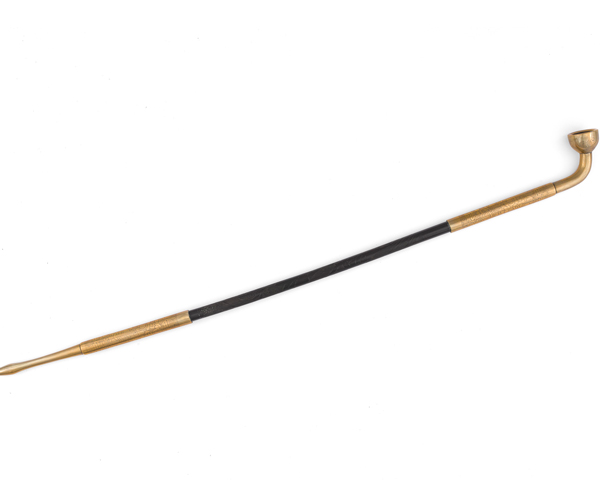
     Chinese Opium pipe

Tuesday, April 16, 2019

Triumphant Tuesday: China - The Construction of the Great Wall of China

     Hello everybody and welcome back to another installment of Nations Made Fun! I'll be your host, Mr. Nations, your tour guide to the wacky world of well... the world! Today we'll be discussing the construction of the Great Wall of China, one of China's greatest achievements to date. Let's get right into it.

     The Great Wall of China is a length of walls and fortifications that stretches to a whopping 13,000 miles in length. The main goal of the wall was to keep the Mongols from the north out of China. The wall didn't serve its purpose effectively, but it stood as a symbol of the power and wealth of the country of China.

     The beginning of the wall can be dated back to the third century B.C.E, but many of the fortifications of the wall can be traced back hundreds of years earlier, some even as far back as the Warring States period. The wall was very carefully planned out. Some of the sections of the wall even overlap to further increase security. It is said that thousands of citizens, convicts, and workers were used to build the massive stone and earth behemoth.

     The wall was constructed by using a base that could differ from fifteen to fifty feet and the actual wall rose fifteen to thirty feet. Guard towers were placed at different intervals throughout the construction of the wall.

     Unfortunately, the Great Wall of China has seen some major damage over the years. It's mainly caused by tourists taking a "souvenir" home with them to their country. Airports have even seen entire blocks being taken from the massive wall. Tourists do it with the mentality that "It's one block. How much of a difference can it make?" But combine that with thousands of others, and it starts to add up. It's a sad but true reality for many tourist attractions.

        Image result for the building of the great wall of china summary

     Picture of the Great Wall of China.

    Fun Facts:
  • The Great Wall of China is the world's longest manmade structure.
  • A popular myth is that the wall can be seen from space. This has been debunked though, as several buildings are larger across than the wall.
  • The wall is actually not a continuous line. It breaks when lakes or mountains offer natural protection. 


 Sources: https://www.history.com/topics/ancient-china/great-wall-of-china
https://www.holbrooktravel.com/blog/traveler-resources/10-fun-facts-about-great-wall-china
   

Monday, April 15, 2019

Misfortunate Monday: China - The Guiyu E-Waste Dump

     Hello everybody and welcome back to another installment of Nations Made Fun! I'll be your host, Mr. Nations, your tour guide to the world! Today we're going to be discussing the Guiyu E-Waste Dump in China. This e-waste plant is very deadly to the environment, so let's get right into it!

     The largest e-waste (electronic waste) waste dump in the world is located in Guiyu, China. This waste site employs over 150,000 people that work up to 16 hours a day dismantling electronic waste. They can spend this time either recycling or discarding the waste.

     As you might have guessed, the effects on the environment are absolutely devastating and the general public health of the workers and the residents is terrible due to all of the deadly chemicals and metals that are emitted from incinerating and disposing of the waste. Some of the waste can cause damage by just sitting there. The chemicals might seep from the electronics after a rainstorm and into the ground, damaging local aquifers and the ground quality.

     It is actually illegal to import electronic waste from China, but since the electronic waste is so profitable for the government, the officials might just overlook that on their next visit for a routine inspection. The people of Guiyu bring in an estimated $7,500,000 from disposing of the e-waste.

     The conditions of Guiyu sound terrible. I am just so glad that many that are reading this never have to experience this ever in their lives. Until tomorrow, Mr. Nations out!

          Image result for conditions of guiyu

     People often have to work around the small children that live in a world of scrap electronics

     Fun Facts:
  • The air in Guiyu often smells of noxious metals and burning plastic.
  • It is estimated that only 12.5% of all e-waste is actually recycled.
  • Workers do not even wear gloves when dismantling electronic devices and are exposed to deadly toxins such as chromium and lead.

Sunday, April 14, 2019

Historical Sunday: China - Part One - Ancient Times

     Hello everybody and welcome back to another installment of Nations Made Fun! In this edition, we're going to be discussing the rich history of China, it's ups and downs and major accomplishments. Let's get straight into it!

     (Note: 3,000 years of history is going to be extremely difficult to fit into two posts, so I'm going to have to summarize a lot of history. Just hang in there. I promise I'll get you guys through it.)

     It is believed that Chinese civilization began along the banks of the Huang He River, otherwise known as the Yellow River and continued to spread from there until the Bronze Age culture reached its peak. After the Bronze Age, China broke into the warring kingdoms for 200 years and its reunification marked the beginning of the imperial China age.

     During the Shang Dynasty, the earliest form of writing was found. The writing was carved into whale bones, also known as oracle bones. Beliefs were also spread through China during the Shang Dynasty. For example, there was a practice known as the Mandate of Heaven. The entire premise of it was that when a new emperor got picked to rule China, they would have something called the Mandate of Heaven. If for some reason a drought or earthquake were to occur, the Chinese would blame it on the ruler for falling out of favor with the gods and would later be overthrown.

     Skipping a few of the uneventful dynasties, that takes us to the Han Dynasty that is widely known for opening the Silk Road
 
Map of the Silk Road:
 Image result for the silk road map

     In the Han Dynasty, a bureaucratic system in which promotion was based on merit and not family ties was adopted as stated in the guidelines of Confucianism. This was when agriculture and commerce grew very rapidly.

     I will finish this post by doing the common era of China next week. Until tomorrow, Mr. Nations out!

     Sources: https://www.chinahighlights.com/travelguide/culture/china-history.htm